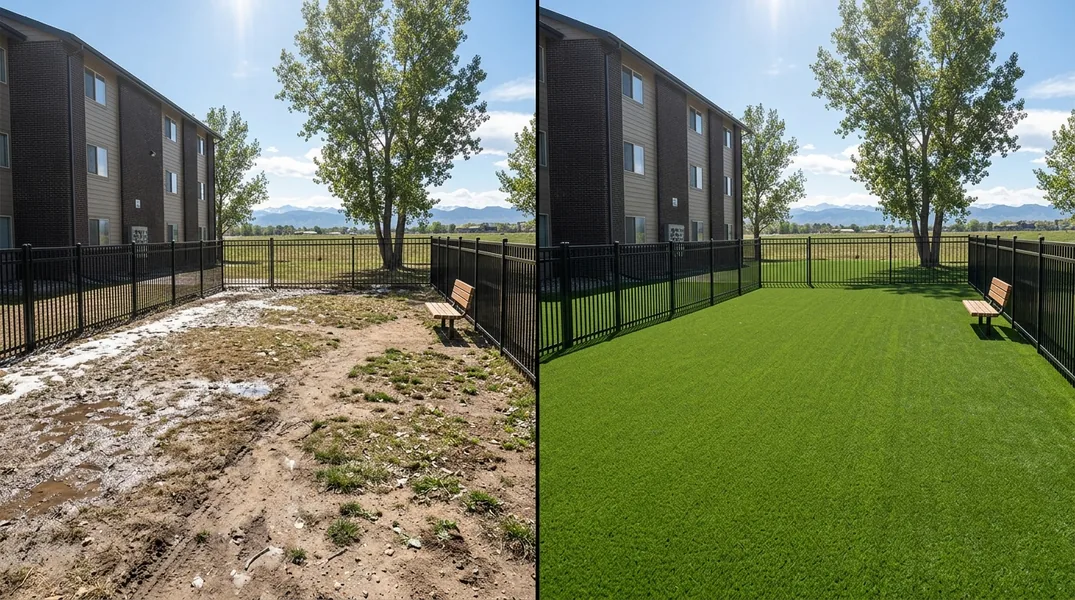
Why Denver's Clay Soil Requires Special Artificial Grass Foundation Work
If you own a home in Denver, you already know that our region's expansive clay presents unique landscaping challenges. Clay soil swells when wet and shrinks when dry, creating movement that can crack foundations, buckle pavement, and destroy poorly installed artificial turf systems. This isn't a minor concern; it's a fundamental reality that every homeowner considering Residential Artificial Grass Installation must understand before breaking ground.
The problem intensifies because Denver's clay doesn't drain naturally. Water sits on the surface, percolates slowly, and remains trapped beneath turf, creating a perfect environment for mold, algae, and turf deterioration. Without a properly engineered base and drainage system, your artificial grass investment can fail within a few years, leaving you with a soggy, unusable yard and expensive removal costs. That's why base preparation and foundation drainage aren't optional extras; they're the foundation of any successful installation in our area.
Understanding Artificial Grass Drainage: The Science Behind Staying Dry
Proper Denver artificial grass drainage works on a simple principle: water must move away from the turf surface and away from the soil beneath it. When rain or irrigation water lands on artificial grass, it should drain through the turf backing within seconds, then move laterally through the base layers toward perimeter drainage systems or grade slopes. If water pools, sits, or remains trapped, you're looking at bacterial growth, odor problems, and eventual turf failure.
The drainage challenge in Denver intensifies because our native clay soil acts as a water barrier. Even if your artificial grass drains perfectly, the water hitting native clay stops moving and pools. This is why professional installers don't simply lay turf on top of existing soil; they create an engineered base system that intercepts water and directs it away. Think of it like a roof over your turf. The roof (artificial grass) sheds water, gutters (base layers) collect it, and downspouts (drainage systems) move it away from the house and yard.
What to Put Under Artificial Grass: Base Layers That Actually Work
The question homeowners ask most often is simple: what to put under artificial grass? The answer depends on site conditions, but professional installations in our region typically use a multi-layer system. The first layer, applied directly over native soil, is a geotextile fabric that separates soil from the stone base above it. This fabric prevents clay particles from migrating upward into the drainage stone, which would clog the system over time and defeat the entire purpose.
Above the geotextile comes crushed stone, typically a mix of 3/4-inch and 1/2-inch angular rock. This layer is critical for artificial grass drainage because angular stone creates air pockets that water moves through easily. Most professional jobs in Denver call for 2 to 4 inches of compacted stone base, depending on existing grade and drainage patterns. Some installations benefit from a second stone layer of finer material (like crushed limestone dust) that creates a smoother, more stable surface for the turf underlay. This layer also helps with minor settling and creates a level playing field, which is especially important if you're planning Putting Green Installation or Pet Turf & Dog Run Installation.
The final critical component is the artificial grass underlay, a specialized foam or rubber pad that sits between the stone base and the turf itself. This underlay provides cushioning, improves drainage performance, and adds years to turf life. Not all underlays are created equal; professional-grade products designed for Denver's climate outperform budget options by a significant margin. A quality underlay resists compression, maintains drainage properties for years, and provides the comfort and performance homeowners expect from their investment.
Turf Base Prep: The Work Nobody Sees But Everyone Needs
Turf base prep is the unglamorous foundation work that determines whether your artificial grass thrives or fails. It begins with a site assessment: measuring existing grade, identifying low spots where water pools, and determining how water naturally flows across your property. Professional installers then remove existing vegetation and topsoil to expose native soil, assess clay conditions, and identify any subsurface issues like old pipes or utilities.
Next comes excavation and grading. The goal is to create a slight slope (typically 1 to 2 percent) that moves water away from structures and toward drainage points. In Denver, this grading work is essential because our flat residential lots don't naturally shed water. Installers then compact native soil, apply geotextile fabric, and lay stone base in lifts, compacting each layer to ensure stability and proper drainage performance. This process requires skill, experience, and the right equipment; it's not a job for weekend warriors or inexperienced crews.
The final prep step involves installing perimeter drainage, often in the form of catch basins, French drains, or swales that intercept water and move it away from the installation area. For Pool Surround Turf installations, drainage becomes even more critical because water from pool decks, splash-out, and chlorinated water must be managed carefully to prevent pooling and chemical damage. Proper base prep ensures that water moves away from your pool, your home's foundation, and your neighbors' properties.
Artificial Grass Underlay Selection: Choosing the Right Product for Denver Conditions
Selecting the right artificial grass underlay is a decision that impacts comfort, drainage, and durability. The two main categories are foam underlays and rubber underlays, each with distinct advantages. Foam underlays are lighter, more affordable, and provide excellent initial cushioning. However, foam can compress over time, especially in high-traffic areas, and may not perform as well in Denver's freeze-thaw cycles where water penetration and expansion can degrade the material.
Rubber underlays, particularly those made from recycled rubber or premium virgin rubber, offer superior durability and drainage performance. These products resist compression, maintain their properties through multiple freeze-thaw cycles, and provide long-term drainage reliability that foam cannot match. For homeowners planning to keep their artificial grass for 10 to 15 years, the modest upfront cost difference between foam and quality rubber underlay is easily justified by improved performance and longevity. Denver Turf Installation recommends discussing underlay options during your free estimate so you can make an informed decision based on your specific needs and budget.
Why Professional Installation Matters: Avoiding Costly Mistakes
DIY artificial grass installation might seem like a money-saving opportunity, but in Denver's clay environment, it's a recipe for expensive failure. Common mistakes include laying turf directly on native clay without base preparation, using inadequate drainage stone, selecting poor-quality underlay, and failing to create proper site grading. Each mistake compounds the others, and by the time problems become visible, you're facing turf replacement, base removal, and reinstallation costs that dwarf the original savings.
Professional installers bring experience, equipment, and knowledge specific to Denver's soil conditions. They understand how our clay behaves, they know which base materials and underlay products perform best in our climate, and they have the expertise to create drainage systems that actually work. When you hire Denver Turf Installation for your project, you're getting decades of regional experience applied to your specific site. We've seen what works and what fails, and we design every installation to thrive in Denver's challenging environment. If you're ready to move forward with confidence, call us at (720) 734-4925 or request a free estimate today.
Looking for a professional artificial grass installation company in Denver? Denver Turf Installation responds fast for all your artificial grass installation needs.
Get a Free Quote