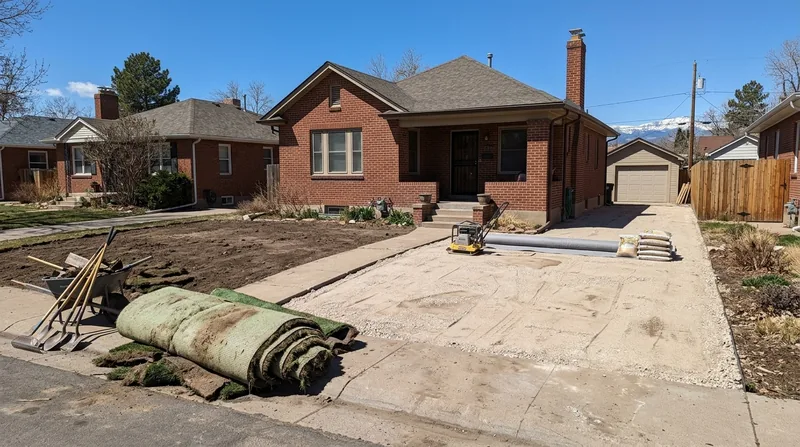




Removing old artificial turf and converting your Denver yard to a fresh surface requires precision, proper disposal, and a clear plan for what comes next. Whether you're replacing worn turf with new turf, removing artificial grass entirely, or converting to a different landscape solution, turf removal, replacement and lawn conversion in Denver demands local knowledge of soil conditions, drainage patterns, and the freeze-thaw cycles that define the high plains. At 5280 feet elevation on expansive clay soil, Denver yards face unique challenges: water pooling after snowmelt, compacted base layers from years of foot traffic, and the intense high-altitude sun that can degrade turf seams and infill over time. We handle the complete removal and conversion process, from debris hauling to base preparation, so your next investment in outdoor space starts on solid ground.
Why Turf Removal and Replacement Matters in Denver's Climate
Denver's weather cycle creates predictable failure points in aging artificial turf. Winter freeze-thaw cycles push seams apart, summer hail can melt synthetic fibers, and the intense UV exposure at high altitude breaks down polyethylene faster than in lower elevations. When turf reaches the end of its life, leaving it in place compounds drainage problems and makes new installation more expensive. Proper removal clears the deck, allows us to assess and repair underlying soil and drainage, and ensures your replacement turf sits on a stable, well-compacted base.
- We remove all old turf, backing, and infill material in a single pass.
- We haul debris off-site to appropriate recycling or disposal facilities.
- We assess soil compaction, grade, and drainage before any new installation begins.
- We address standing water or poor drainage that shortened the life of the old turf.
- We compact and level the base to manufacturer specifications for new turf installation.
A proper removal and base prep job prevents the common mistake of laying new turf over a compromised foundation.
Key info: In neighborhoods like Capitol Hill, Washington Park, and Park Hill, older homes often have turf installed over original Kentucky bluegrass lawns without proper base removal. When we remove that turf, we typically find compacted clay, poor drainage, and sometimes old sod still locked in place. Starting fresh with a 4 to 6 inch compacted base prevents repeat failures.
Learn more about what comes after removal on our residential artificial grass installation page.
How We Handle Turf Removal and Replacement: Step by Step
The removal process is methodical and site-specific. We start with a walk-through to identify any underground utilities, irrigation lines, low-voltage lighting, or pet-fence wires that won't show up on a Colorado 811 utility locate. We then remove turf, backing, and infill in sections, load debris into a truck, and haul it away. Once the site is clear, we evaluate the subgrade, identify any drainage issues, and prepare the base according to the specifications of whatever turf product or surface you choose next.
- We request a Colorado 811 utility locate before any excavation work begins.
- We manually mark and protect private lines such as irrigation, low-voltage wiring, and pet fencing.
- We cut and remove turf in manageable sections to minimize disruption to the rest of your yard.
- We remove backing, infill, and any stabilizing layers down to native soil.
- We grade the exposed surface to ensure proper water runoff away from structures.
- We compact the base to 95 percent density or to the specs required by your new surface type.
This foundation work is what separates a professional removal from a quick strip-and-go job.
Local example: A Littleton property in a master-planned community had turf failing at the seams after six years. Removal revealed 2 inches of settling and a clay base with zero slope toward the drainage easement. We re-graded, compacted, and installed new turf with proper crown and subsurface drainage. The replacement turf has held for four years with no seam issues.
See our turf repair page for details on how we handle partial removal and targeted base repair when only a section of your yard needs work.
Removal and Base Prep Methods for Denver Yards
| Approach | Description | Best for |
|---|---|---|
| Full removal and replacement | We remove all old turf, backing, and infill; grade and compact the base; and install new turf to full specification. | Yards where the old turf has failed, drainage is compromised, or you want a different turf product or pile height. |
| Removal with lawn conversion | We remove turf completely and prepare the base for natural sod, xeriscaping, hardscape, or a mixed landscape design. | Homeowners who want to return to a real lawn, create a native plant garden, or build a patio or other hardscape feature. |
| Partial removal and repair | We remove damaged sections, address the underlying cause (drainage, settling, pet damage), and re-install turf in that zone only. | Yards where only a portion of the turf is worn or damaged and the rest of the installation is sound. |
| Removal with drainage retrofit | We remove turf, install subsurface drainage or French drain, re-grade, compact, and reinstall turf or convert to another surface. | Yards with standing water, poor slope, or clay soil that won't drain; common in Denver's expansive clay zones. |
Turf Removal, Replacement and Lawn Conversion Cost in Denver: What to Expect
Removal pricing starts at $2 per square foot for straightforward strip-and-haul work on accessible, flat yards with no complications. The actual cost depends on several factors: whether the old turf has multiple layers of backing, the volume and type of infill (sand, crumb rubber, or zeolite), site access, proximity to structures or planted beds, and whether the yard has drainage issues that need to be addressed before new installation. A 400-square-foot patio removal in Englewood may run $800 to $1,000; a 1,000-square-foot yard conversion with drainage work in Cherry Hills Village could be $3,500 to $5,500. Getting two to three estimates on-site is always smart because every yard is different.
If you're replacing the turf with new artificial grass installation, the base prep work done during removal is factored into the total project cost. If you're converting to a different landscape (natural sod, xeriscaping, hardscape), we prepare the base and you move forward with your chosen contractor. See our pricing page for detailed cost ranges and what drives variation in your specific project.
Real scenario: A Greenwood Village home with 800 sq ft of 12-year-old turf removal and base prep for new installation typically costs $1,600 to $2,400, depending on infill type and whether drainage correction is needed. Add another $3,200 to $6,400 for new turf installation (20-ounce to 50-ounce face weight, 6-inch base), so a full replacement runs $4,800 to $8,800 all in.
What to Look for When Hiring a Turf Installation Company Near Denver
Choosing the right company for removal and replacement is about more than price. You want a local turf installer who takes responsibility for the entire process, from utilities and debris to base preparation and new installation. Avoid crews that strip turf and leave, or that lay new turf on bare, uncompacted soil. A professional removal job and solid base prep will add years to the life of whatever comes next.
- Ask for a certificate of insurance naming general liability and workers compensation coverage.
- Request a written specification for the new turf (product name, face weight, pile height, infill type and pounds per square foot, base depth and compaction method).
- Check references and ask to see photos of finished removal and replacement work in Denver neighborhoods you recognize.
- Confirm that the company will request a Colorado 811 utility locate and protect private irrigation and electrical lines.
- Verify that the estimate includes base grading, compaction to proper density, and disposal of old turf and infill off-site.
- If your property is in an HOA, check whether front-yard turf replacement requires architectural approval and confirm the installer will help with the submittal process.
A local, independent turf installer will name the product, the base depth, and the infill in writing and stand behind the work.
Ready to get started? Contact us for a free, no-obligation estimate or call (720) 734-4925 to discuss your removal and replacement project. We serve Denver, Littleton, Englewood, Greenwood Village, Cherry Hills Village, Golden, Wheat Ridge, Evergreen, Parker, Castle Rock, and surrounding areas.
Turf Removal, Replacement & Lawn Conversion in Denver: Pricing Guide
| Service | Price | Details |
|---|---|---|
| Standard turf removal | Starting at $2/sq ft | Strip, backing, infill removal and off-site disposal on accessible, flat yards with no complications |
| Removal with base prep and grading | Starting at $2.50/sq ft | Includes removal plus soil assessment, compaction to 95 percent density, and grading for drainage and new installation |
| Removal with drainage retrofit | On estimate | Removal plus subsurface or French drain installation, re-grading, and compaction; required when standing water or poor slope is present |
| Partial removal and targeted repair | On estimate | Removal of damaged sections only, root cause analysis, base repair, and re-installation in affected zone; cost depends on damage extent and access |
| Travel and site visit | Included | No separate mileage fee or travel charge within Denver and surrounding service areas; estimate included in pricing |
| Free estimate | No obligation | On-site walk-through and written estimate within 24 hours; call (720) 734-4925 to schedule |
Indicative pricing, the exact cost depends on square footage, finish, and site access. Free personalized estimate within 24h at (720) 734-4925.


