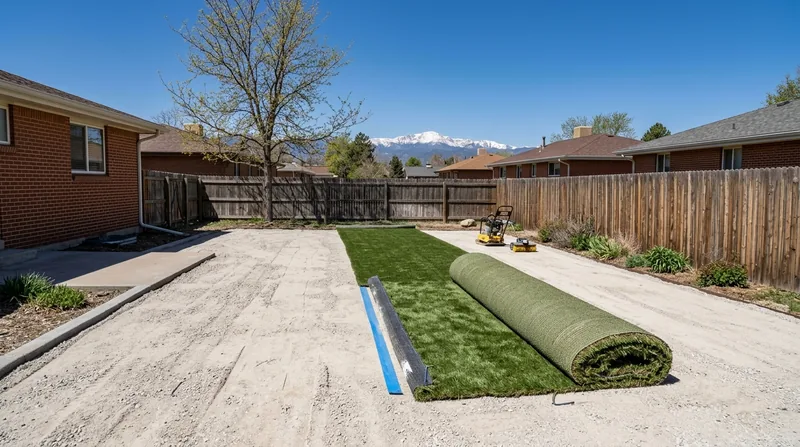




Residential artificial grass installation in Denver transforms high-altitude yards into durable, low-maintenance outdoor spaces that handle the region's intense sun, freeze-thaw winters, and clay soil without the constant watering and mowing that real turf demands. Denver spreads across the high plains at 5,280 feet with a mix of brick Victorians in Capitol Hill, 1920s bungalows in Washington Park, tree-lined Tudor homes in Park Hill, and modern infill across Highland and Sloan's Lake, each with yards shaped by cottonwoods, honey locusts, and blue spruce. The climate here is unforgiving: summer hail and afternoon thunderstorms pound exposed yards, snow and freeze-thaw cycles stress dormant grass, and the high-altitude sun bleaches and dries natural lawns faster than homeowners can irrigate. Artificial turf solves this. We install turf systems from base preparation through finishing, specifying the product, face weight, pile height, infill type and depth in writing so you know exactly what you're getting. Since 2013, we've worked across Denver, Littleton, Englewood, Parker, Castle Rock, and the surrounding communities, handling residential yards of all sizes. This page covers what residential artificial grass installation means in Denver, how we approach it, what it costs, and how to choose the right turf installer for your home.
Why Residential Artificial Grass Installation Matters in Denver's Climate
Denver's high-altitude climate creates specific challenges for natural turf. The intense UV radiation at 5,280 feet burns out Kentucky bluegrass faster than in lower elevations, summer hail tears leaf blades, and the region's clay soil drains poorly and compacts under foot traffic. Winter freeze-thaw cycles heave and crack soil, killing shallow root systems. Meanwhile, water restrictions and high evaporation rates make maintaining a green lawn expensive and labor-intensive. Artificial turf removes these pressures entirely.
- Withstands Denver's intense high-altitude sun without fading, browning, or needing constant irrigation.
- Handles freeze-thaw cycles and snow melt without heaving, compaction, or bare patches in spring.
- Eliminates weekly mowing, seasonal aeration, and chemical treatments that tie up weekends.
- Drains properly in clay soil with a engineered base and underlay, preventing puddles and mud.
- Stays green and playable year-round, even when real grass would be dormant or dead.
For Denver homeowners tired of fighting the climate and the water bill, artificial turf is a practical answer.
Key info: Many Denver HOAs restrict front-yard turf color, pile height, and edging. We help prepare HOA architectural submittals and understand the rules, but we never promise approval. Rear yards and side yards typically have fewer restrictions. Check your CC&Rs before planning a large front installation.
For more on how artificial turf compares to real sod and natural grass, see our home page and comparison resources.
How We Install Residential Artificial Grass in Denver: Our Process
Proper installation is everything. We don't lay turf on bare dirt and leave. Every job starts with site assessment, base preparation, and a written specification naming the turf product, face weight, pile height, infill type and pounds per square foot, and base depth and compaction. We work with your landscape, manage drainage, and finish edges cleanly so the turf looks professional and lasts.
- We visit your yard, measure the area, identify drainage issues, note tree shade and root zones, and discuss your goals and budget.
- We request Colorado 811 utility locates to mark public lines before we excavate, and we identify private irrigation and pet-fence wires that locates don't mark.
- We remove existing sod or hardscape (or coordinate removal separately if you prefer) and excavate to grade, managing drainage and slope.
- We compact the subgrade, install a perforated base layer (typically recycled asphalt or crushed stone), and compact again to specifications.
- We roll out the turf, seam it tightly, and secure it with landscape staples or adhesive depending on the product and surface type.
- We apply infill (typically silica sand, recycled rubber, or antimicrobial zeolite for pet areas), brush it into the pile, and water to set it.
- We edge the turf with aluminum, steel, or plastic edging, trim around trees and structures, and walk the entire installation to verify seams, corners, and drainage.
The whole process typically takes 2 to 4 days for a standard residential yard, depending on size, existing hardscape, and site conditions.
Local example: A 1,000 sq ft rear yard in a Harvey Park ranch with clay soil and poor drainage took us 3 days: day one for excavation and base prep, day two for turf roll and seaming, day three for infill and edging. The homeowner added a dog run on the side yard the next month using pet turf with antimicrobial infill.
| Approach | Description | Best for |
|---|---|---|
| Full removal and base rebuild | Remove existing sod or hardscape, excavate, compact subgrade, install engineered base with perforated drainage layer, compact again, then install turf and infill. | Most residential yards, especially those with poor drainage, clay soil, or existing hardscape in poor condition. |
| Base prep over existing concrete or patio | Install perforated underlay directly over concrete or paver surface to manage water flow, then roll and seam turf. | Patios, pool surrounds, balconies, and rooftops where hard surfaces already exist and digging is not an option. |
| Turf-over-existing-sod (limited) | Install turf directly over existing sod if drainage is adequate and the surface is level. Not recommended in Denver clay soil or poor-drainage yards. | Rare in Denver. Only if site survey confirms excellent drainage and the existing sod is thin and healthy. |
| Spot repair or seam replacement | Remove and replace small sections of turf, re-seam edges, or install new infill in high-traffic areas without full reinstallation. | Existing turf with melt spots from window reflections, lifted edges, or flattened lanes. See our turf repair service. |
Residential Artificial Grass Installation Cost in Denver: What to Expect
Pricing for residential artificial turf installation in Denver starts at around $8 per square foot for material, base prep, and labor on a straightforward rear yard with good access and no major site complications. Most residential yards in Denver range from 400 to 1,500 square feet, putting a typical project between $3,200 and $12,000. The final price depends on several real factors: the turf product you choose (face weight and pile height), infill type, site access and grading complexity, existing hardscape removal, tree root zones, and drainage improvements needed to handle Denver's clay soil and snow melt.
- Turf product and quality drive material cost: a mid-range 50-ounce residential turf with 1.5-inch pile runs less than a premium 65-ounce pet turf with 2-inch pile.
- Base depth and compaction are non-negotiable in Denver clay: expect 4 to 6 inches of compacted base, which adds labor and material.
- Infill choice matters: silica sand is the baseline, recycled rubber is mid-range, antimicrobial zeolite for pet areas costs more but solves odor problems.
- Site access affects labor: a narrow side yard or a yard with large trees and root zones takes longer than an open rectangle.
- Existing sod or hardscape removal adds cost if you want us to haul it away, or you can arrange separate removal and save money.
- Tree work (root pruning, branch trimming for clearance) is not our service, but we coordinate around existing trees and note any conflicts upfront.
Every estimate is free and includes a site walk, measurement, and a written quote breaking down material, labor, and any site-specific costs. For a detailed breakdown and to see pricing for different yard sizes and product grades, visit our pricing page.
Residential Artificial Grass Installation Near Me: What Denver Homeowners Should Know When Hiring
Not all turf installers are the same. Some crews lay cheap 40-ounce turf on bare dirt and disappear; others are exclusive dealers locked into one brand and can't offer you options. We're a local independent turf installation company, and we stand behind our work with a written specification, free estimates, and honest guidance. When you're comparing installers in Denver, Littleton, Englewood, or anywhere in the region, here's what to look for and ask.
- Verify the installer carries a certificate of insurance naming general liability and workers' compensation coverage, and ask to see it before work begins.
- Ask for a written specification that names the turf product, face weight, pile height, infill type and pounds per square foot, and base depth and compaction method.
- Check references and photos of finished work in your neighborhood or similar Denver terrain and architecture.
- Confirm the installer has a local address and phone number you can reach, not a 1-800 line or out-of-state office.
- If your yard is in an HOA, discuss front-yard restrictions upfront: the installer should help with submittals but never promise HOA approval.
- Ask whether permits are required for your specific address and project scope, and defer to the Denver or county building department for the final answer.
We invite you to call us at (720) 734-4925 for a free, no-obligation estimate. We'll walk your yard, answer your questions, and give you a clear price and timeline. Contact us online or call to schedule.
Residential Artificial Grass Installation in Denver: Pricing Guide
| Service | Price | Details |
|---|---|---|
| Residential yard, 400-600 sq ft, standard turf and base | Starting at $8/sq ft | Material, excavation, base prep, turf installation, and silica sand infill included; final cost depends on site access and existing hardscape removal |
| Residential yard, 600-1,200 sq ft, mid-range product with drainage | Starting at $8/sq ft | Higher-grade turf, perforated base layer for Denver clay soil, labor for grading and compaction, standard edging included; tree root zones or poor drainage may increase labor |
| Pet turf installation or antimicrobial infill upgrade | From $9/sq ft | Reinforced drainage, antimicrobial zeolite or Envirofill infill, and specialized seaming for pet areas; higher cost reflects durability and odor control |
| Complex job with major site work, tree removal coordination, or hardscape removal | On estimate | Site-specific pricing required after walk-through; includes grading changes, drainage solutions, and coordination with other contractors |
| Travel and estimates | Included and free | No separate travel fee within Denver and surrounding service areas; free estimate with 24-hour response at (720) 734-4925 |
Indicative pricing, the exact cost depends on square footage, finish, and site access. Free personalized estimate within 24h at (720) 734-4925.


