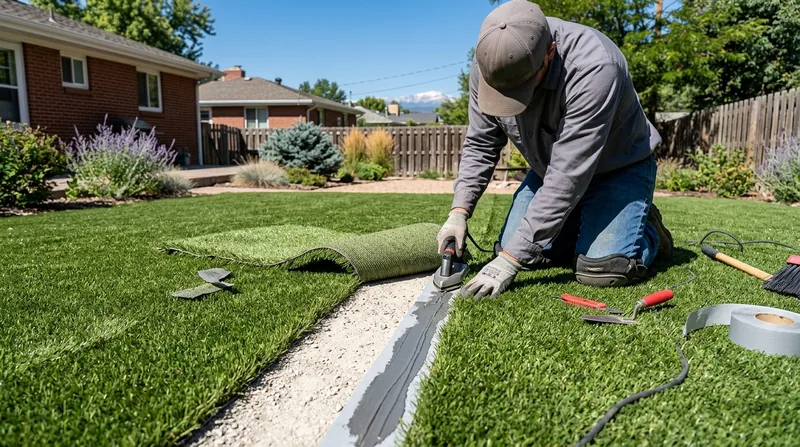




Denver's freeze-thaw winters and intense high-altitude sun create a punishing environment for artificial turf seams and edges. Thermal stress, ground movement from clay soil expansion, and UV exposure cause seams to separate, edges to lift, and infill to migrate, leaving bare spots and trip hazards across residential yards in Capitol Hill, Park Hill, Washington Park and suburban developments in Parker, Castle Rock and Littleton. Turf Repair & Seam Repair in Denver is not cosmetic work, it is structural maintenance that restores safety, drainage and appearance before small damage becomes a full replacement. We identify the root cause, re-seal or re-tape seams, secure lifted edges, recompact infill, and address the drainage or thermal issue that caused the failure in the first place. At Denver Turf Installation, we have been performing turf repair and seam work since 2013, and we know which failure modes dominate in this climate and how to fix them right the first time.
Why Seams Fail in Denver: The Climate Reality
Denver sits at 5,280 feet with winter temperatures that drop below freezing for weeks at a time, then swing 40 degrees in a single day. Artificial turf expands and contracts with these thermal swings, and seams are the weak point. Clay soil beneath the turf freezes and heaves, pushing the base layer upward and stressing the seams that hold the turf together. Summer heat and direct UV radiation break down adhesives and tape, while hail and afternoon thunderstorms saturate the base and cause drainage failure. When seams fail, water pools beneath the turf, infill washes away, and the turf begins to separate from the base. Lifted edges trap debris, create trip hazards and invite foot traffic that accelerates damage.
- Thermal cycling from freeze-thaw stress causes seams to separate and tape adhesive to fail.
- Clay soil heave in winter lifts the base and creates stress points at seams and edges.
- UV exposure and hail damage degrade tape and break down the turf backing over time.
- Poor drainage concentrates water at low spots, destabilizing the base and washing infill away.
- Foot traffic and lawn equipment accelerate damage at seams and edges once the seal is broken.
Early repair prevents these failures from spreading and keeps your turf safe and functional for years longer.
Key info: A separated seam in a Denver backyard in March often signals freeze-thaw damage that began in February. We inspect the base layer, check for frost heave and drainage problems, and repair the seam with a method matched to the cause, not just the symptom. This is why a visual estimate on site matters more than a phone quote.
How We Repair Turf Seams and Edges in Denver: Our Process
We start with a site inspection to identify the cause of the failure. Is the seam pulling apart because the base has shifted, because the tape has failed, or because drainage is poor? Is the edge lifted because of frost heave, foot traffic or improper installation? We check infill compaction, base stability, and water movement. Once we understand the root cause, we choose the repair method that fixes it. For a simple tape failure we re-tape the seam. For a lifted edge we secure it with new fasteners or adhesive. For infill loss we recompact and top-dress. For drainage problems we may need to address grading or add a layer of base material. We work during weather windows when the turf is dry and the base is stable, because repair done in wet or frozen conditions will fail again.
- We inspect the seam, edge or damaged area and probe the base layer to identify the failure cause.
- We clean the seam area and remove any failed tape or adhesive down to clean backing.
- We re-tape or re-seal the seam using commercial-grade seam tape and adhesive rated for freeze-thaw cycles.
- We secure lifted edges with fasteners or adhesive, and recompact infill to the proper density.
- We test drainage and address any grading or base issues that contributed to the failure.
- We allow adequate cure time before returning the area to foot traffic.
This methodical approach means your repair lasts. We also offer turf cleaning and maintenance to help you extend the life of your installation between repairs.
Example: A Washington Park homeowner noticed a 4-foot seam separating in late March. We inspected and found frost heave had lifted the base 1.5 inches. We excavated beneath the seam, re-compacted the base, re-taped the seam with cold-rated adhesive, and secured the edge with new fasteners. The repair held through the following winter because we addressed the heave, not just the symptom.
Repair Methods: Which Approach Works Best
Not every seam repair is the same. The method depends on the damage, the age of the turf, the cause of the failure and how much of the area is affected. A small tape failure on a 3-year-old installation calls for re-taping. A lifted edge from frost heave may need fasteners or re-adhesive. A large seam separation with infill loss may require partial replacement of that section. We assess each job on site and explain the options before we start work.
| Repair Method | Description | Best for |
|---|---|---|
| Seam Re-taping | Remove failed tape, clean backing, apply new commercial-grade seam tape with UV and freeze-thaw rated adhesive. | Tape failure, separation under 6 inches, turf still well-anchored on both sides. |
| Edge Re-adhesion | Lift the edge, clean the base, apply new perimeter adhesive, weight it down until cure is complete. | Lifted edges from adhesive failure, no base movement, perimeter access is safe. |
| Edge Fastening | Secure the lifted edge with stainless steel fasteners driven through the turf backing into the base or perimeter. | Lifted edges from frost heave or base movement, high-traffic areas, permanent anchor needed. |
| Infill Recompaction | Remove displaced infill, rake the turf fibers, recompact infill to proper density, top-dress to level. | Flattened lanes, infill migration, bare spots from drainage, no seam or backing damage. |
| Partial Section Replacement | Remove damaged turf section, prepare base, install new turf piece, re-tape seams to existing turf. | Large seam separation, backing damage, melting from window reflection, irreparable damage zone. |
We always explain why we recommend one method over another, and we do not charge for the inspection or the recommendation.
Turf Repair & Seam Repair Cost in Denver: What to Expect
The cost of turf repair in Denver depends on the scope of damage, the repair method, how accessible the area is and whether the base layer needs attention. A single seam re-tape on a 4-foot section costs less than a lifted edge that requires fastening across a 20-foot perimeter. A small infill recompaction is faster than partial section replacement. Drainage problems that require base work add time and material cost. We measure the damaged area on site, determine whether the base is stable, and quote the work in writing before we start.
Most small to medium seam repairs in Denver range from $350 to $800, depending on the length of the seam, the repair method and the condition of the base. A lifted edge repair with fasteners typically runs $400 to $1,000 for a 15 to 25-foot perimeter. Infill recompaction and top-dressing on a 200 to 300 square-foot area runs $300 to $600. Partial section replacement or repairs that require base preparation can range from $800 to $2,000 or more, depending on the size of the section and the cause of the failure. Travel is included in our service area, and we provide a free estimate within 24 hours at (720) 734-4925. Visit our pricing page for more detail on what moves the cost up or down.
Get 2 to 3 estimates from turf installation companies in your area. Compare not just price but the repair method recommended and the warranty offered on the work. A cheap quote that uses low-grade tape and skips base inspection will fail again in one or two seasons. A solid repair costs more upfront but lasts.
Turf Repair & Seam Repair Near Me: What Denver Homeowners Should Know When Hiring
Choosing the right turf installer for repair work is as important as choosing one for a new installation. A bad repair job wastes money and creates safety hazards. We recommend asking any turf installer the same questions, including us. First, verify that the company carries a certificate of general liability and workers compensation insurance. Ask to see it. Second, get a written spec for the repair that names the tape or adhesive product, the fastener type if applicable, the infill type and compaction density, and the base depth and condition after repair. Third, ask for references and photos of similar repair work. Fourth, understand whether the company has handled the specific failure mode you are facing. Has the installer repaired frost heave damage in Denver? Seams separated by freeze-thaw stress? A company that installs turf but has never repaired it may not diagnose the root cause correctly.
- Ask for proof of insurance naming general liability and workers compensation coverage on the repair.
- Request a written estimate that specifies the repair method, materials, timeline and warranty on workmanship.
- Check references from other Denver homeowners and ask specifically about seam and edge repairs.
- Verify that the installer has experience with freeze-thaw damage and base issues common to Denver.
- Understand the warranty offered. We provide a one-year warranty on workmanship for seam and edge repairs.
- Ask whether the repair includes an inspection of the base layer and drainage, not just the surface symptom.
Contact us at (720) 734-4925 or visit our contact page to schedule a free, no-obligation estimate for your turf repair. We will inspect the damage, identify the cause, explain your options and provide a written quote before we begin.
Turf Repair & Seam Repair in Denver: Pricing Guide
| Service | Price | Details |
|---|---|---|
| Single seam re-tape or re-seal | Starting at $350 | Tape failure under 6 feet, clean backing, freeze-thaw rated adhesive applied, includes inspection and base check |
| Lifted edge repair with fasteners or re-adhesion | Starting at $450 | Perimeter edge 15 to 25 feet, fasteners or adhesive, frost heave or traffic damage, includes base assessment |
| Infill recompaction and top-dressing | Starting at $300 | 200 to 300 square feet, flattened lanes or bare spots, rake and recompact, includes infill material |
| Partial section replacement | Starting at $800 | Seam separation with backing damage, large melt spot, or irreparable section, includes base prep and new turf |
| Drainage assessment and base repair | On estimate | Grading changes, base layer replacement or compaction, foundation of long-term repair success, quoted after site visit |
| Free estimate and inspection | No charge | On-site assessment of damage cause, written repair recommendation, response within 24 hours, no obligation to book |
Indicative pricing, the exact cost depends on square footage, finish, and site access. Free personalized estimate within 24h at (720) 734-4925.


