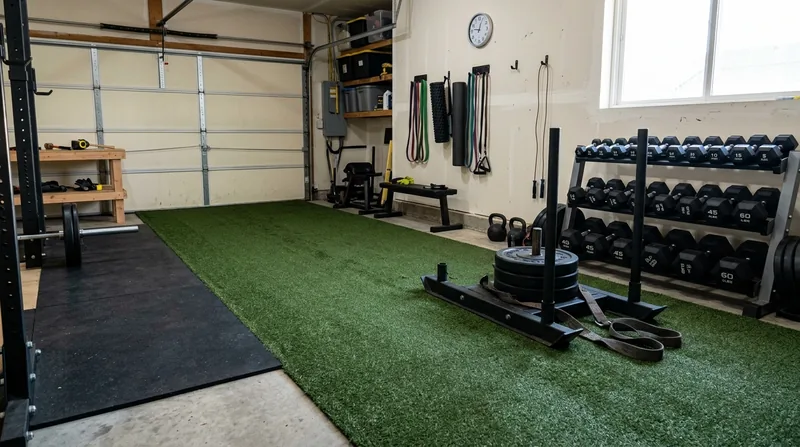




Sports, Gym & Court Turf in Denver demands a playing surface that handles intense foot traffic, withstands the high-altitude sun and freeze-thaw cycles of the Front Range, and delivers consistent performance year-round. Whether you're installing an athletic field, a batting cage, a gym floor, or a multi-sport court, synthetic turf engineered for sports applications outperforms natural grass under the demands of competitive play and high-volume training. Denver's 5,280-foot elevation, intense UV exposure, and winter snow and ice create conditions where real grass wears thin and compacts under heavy use. Synthetic sports turf stays playable through spring mud, summer heat, and freeze-thaw stress that would kill or thin a natural field. We design and install turf systems built for durability, safety, and the specific requirements of your sport or fitness facility.
Why Sports and Gym Turf Matters in Denver's High-Altitude Climate
Denver sits at 5,280 feet where the sun is intense, the air is dry, and winters bring repeated freeze-thaw cycles that devastate natural turf. Real grass in full sun burns out; in shade it thins and compacts under foot traffic. A batting cage or gym floor in Denver needs a surface that resists UV damage, maintains grip in wet and dry conditions, and won't separate at the seams when temperature swings 40 degrees in a single day. Sports-grade synthetic turf is engineered with UV stabilizers, reinforced backing, and infill systems that stay stable through Colorado weather.
- Withstands high-altitude UV exposure without fading or breaking down in the intense Denver sun.
- Maintains playability through freeze-thaw cycles and winter snow that would compact and kill natural grass.
- Provides consistent traction and ball response for training and competition, regardless of weather.
- Drains rapidly after rain and afternoon hail storms common to the Front Range.
- Resists wear patterns and divots that develop under heavy foot traffic on athletic fields and in fitness facilities.
These advantages make synthetic sports turf the standard for serious training facilities, municipal fields, and high-performance courts across the Denver metro.
Key info: Denver's freeze-thaw stress is the dominant failure mode for natural turf fields. Real grass roots heave and break as soil freezes and thaws through winter, leaving bare patches and uneven surfaces. Sports-grade synthetic turf eliminates this problem entirely, staying level and playable from October through April.
For technical guidance on sports turf specifications and local requirements, see the Denver Parks and Recreation permits page for field and facility projects.
How We Install Sports and Gym Turf in Denver: Step by Step
Sports turf installation begins with site assessment and base preparation tailored to your sport and drainage needs. We evaluate foot traffic patterns, sun exposure, and water management to select the right turf product, pile height, face weight, and infill system. The base must be stable, properly graded, and compacted to prevent settling or seam separation under heavy use. We then lay the turf with tight, reinforced seams and finish with infill calibrated for your specific application, whether that's a baseball diamond, a fitness studio, a tennis court, or a multi-sport training field.
- We conduct a site visit to assess drainage, sun exposure, foot traffic zones, and any existing damage or grading issues.
- We remove existing turf, asphalt, or concrete if needed and prepare a stable, compacted base layer to prevent settling.
- We select turf product, pile height, and face weight matched to your sport and the intensity of play or training.
- We lay turf with seams positioned to minimize visibility and stress, using reinforced backing and adhesive for heavy-traffic applications.
- We apply and calibrate infill (sand, rubber, or hybrid) to deliver the right ball response, traction, and drainage for your sport.
- We inspect all seams, edges, and infill distribution, and provide written specifications including product name, face weight, pile height, infill type and pounds per square foot, and base depth.
A properly installed sports surface stays playable through seasons of training and competition with minimal maintenance.
Local example: A batting cage in Littleton needs different turf specifications than a fitness studio in downtown Denver. We size pile height and infill density based on the specific sport, the intensity of use, and the local climate stress. A Denver gym floor, for instance, demands higher face weight and tighter seams than a recreational field because foot traffic is concentrated and year-round.
For more on how we approach specialized turf installations, see our commercial artificial grass installation page.
| Application | Turf Specs | Infill and Base |
|---|---|---|
| Batting Cage | High face weight, 1.5 to 2 inch pile, reinforced backing | Rubber crumb infill, 2 to 3 inch compacted base |
| Fitness Studio or Gym Floor | Medium to high face weight, 0.75 to 1.25 inch pile | Sand-infill or hybrid, 1.5 to 2 inch compacted base |
| Multi-Sport Field or Court | High face weight, 1.25 to 2 inch pile, nylon or polyethylene blend | Sand and rubber hybrid, 2 to 3 inch compacted base |
| Training or Conditioning Area | Medium face weight, 0.5 to 1.5 inch pile | Sand-infill, 1 to 2 inch compacted base |
Sports, Gym & Court Turf Cost in Denver: What to Expect
Sports and gym turf in Denver starts at around $8 per square foot for installation and materials on straightforward applications like a fitness studio or training area. Costs rise with site complexity, turf specifications, and base preparation. A batting cage with heavy-duty backing and reinforced seams, or a multi-sport field with specialized infill calibration, will run higher. The size of the project also matters: smaller installations like a 500-square-foot gym floor may carry slightly higher per-square-foot overhead, while a 5,000-square-foot field spreads labor and materials more efficiently.
Factors that move the price up include existing ground conditions (grading, drainage, removal of old surfaces), the specific sport and its turf requirements, seam placement and reinforcement, infill type and density, and access for equipment. A site with poor drainage or uneven terrain requires more base work. A field designed for multiple sports or high-impact training needs premium turf and infill calibration. Always get 2 to 3 estimates from turf installation companies you trust, and ask each for a written specification that names the turf product, face weight, pile height, infill type and pounds per square foot, and base depth and compaction method.
See our full pricing page for typical ranges and worked examples for common project sizes.
What to Look for When Hiring a Turf Installation Company Near Me in Denver
Choosing the right turf installer matters because a poorly installed sports surface fails under load, separates at seams, or develops bare spots and divots within a season. The difference between a solid installation and a quick-fix job often comes down to base preparation, seam technique, and honest product selection. When you call a turf installation company near Denver, ask for proof of insurance naming general liability and workers' compensation. Request a written specification that lists the turf product by name, face weight, pile height, infill type and pounds per square foot, and base depth. Ask for local references and photos of finished work in similar applications.
- Verify that the company is fully insured and can provide a certificate of insurance on request.
- Ask for a written specification that names the turf product, face weight, pile height, infill, and base depth before any work starts.
- Request references from at least three similar projects (batting cage, gym floor, or athletic field) completed in the Denver area within the last two years.
- Ask about base preparation and compaction method, and how the company handles drainage and grading on sloped or problem sites.
- Confirm that seams are reinforced and positioned for heavy-traffic zones, and ask how the company inspects and tests seams before finishing.
- Get at least two estimates so you can compare approach, product quality, and price.
A turf installer who takes time to understand your sport, your climate, and your site will deliver a surface that performs and lasts.
Ready to discuss your sports turf project? Contact us for a free estimate or call (720) 734-4925. We serve Denver, Littleton, Englewood, Castle Rock, Parker, and surrounding areas.
Sports, Gym & Court Turf in Denver: Pricing Guide
| Service | Price | Details |
|---|---|---|
| Fitness Studio or Gym Floor | Starting at $8/sq ft | Medium-face-weight turf, sand infill, 1.5 to 2 inch compacted base, tight seams for high foot traffic |
| Batting Cage or Training Area | Starting at $9/sq ft | High face weight, reinforced backing, rubber crumb infill, 2 to 3 inch base, seams positioned for ball impact zones |
| Multi-Sport Field or Court | Starting at $10/sq ft | Premium turf product, hybrid infill, specialized base preparation, drainage design, seam reinforcement for intense play |
| Site with Poor Drainage or Grading | On estimate | Requires additional base work, grading, or drainage layer before turf installation, assessed on site |
| Travel and Estimate | Free | Included in Denver metro area, response within 24 hours at (720) 734-4925, no obligation |
Indicative pricing, the exact cost depends on square footage, finish, and site access. Free personalized estimate within 24h at (720) 734-4925.


